
2026 is a banner year as Americans mark the 250th anniversary of independence from the British crown. I have fuzzy childhood memories of my hometown’s celebration of our country’s bicentennial. Fortunate are we whose time on earth includes the marking of these monumental events, prompting us to dig a little deeper into our history.
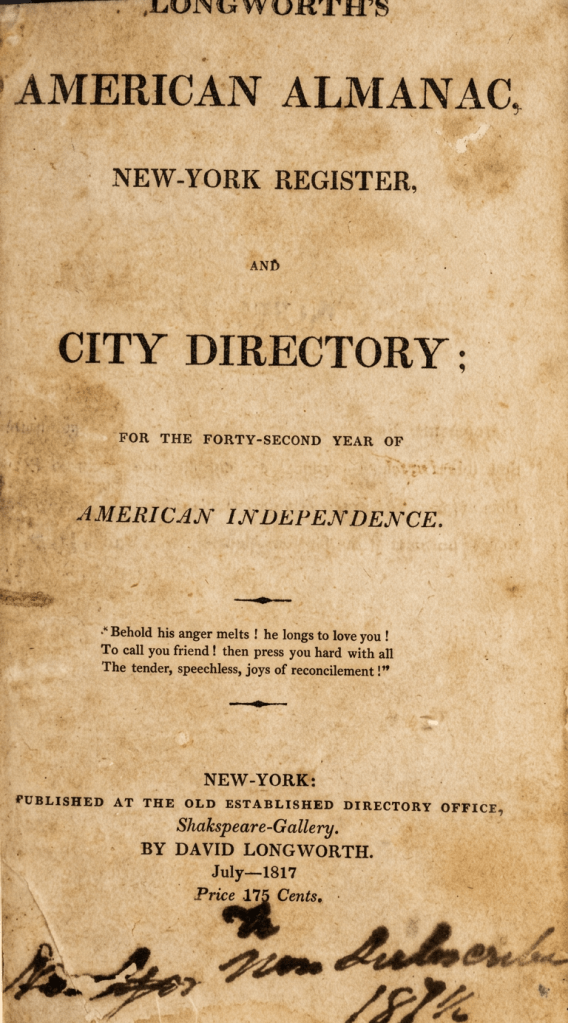
Post Revolution Americans understood the importance of remembrance and began the custom of dating records and all written materials relative to the year 1776. The title page of this 1817 New York City Directory illustrates the dating practice.
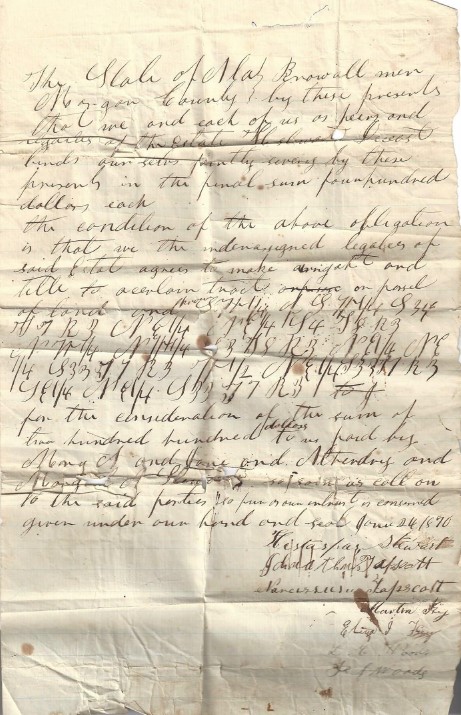
In 1891 a similar format was used in my great-great-grandmother’s land record. To date, I am unsure how long this form was used, but it was obviously important in the minds of those who didn’t take freedom for granted.

This year of Our Lord two-thousand, two-hundred and twenty-six and of the 250th year of American Independence is the perfect time to highlight the heroes who participated in the War of the Revolution. A little history lesson for context is unavoidable.
The Second Continental Congress approved the Declaration of Independence on July 4, 1776. I find the selection of the commemorative date of July the 4th to be an interesting one. The War itself spanned eight years, from the first shot at Lexington April 19, 1775, to September 3, 1783, at the signing of the Treaty of Paris. Not to split hairs, but the signing of that Treaty is the event that birthed a nation. An excerpt of Article 1 of the Treaty:
“His Britannic Majesty acknowledges the said United States, viz., New Hampshire, Massachusetts Bay, Rhode Island and Providence Plantations, Connecticut, New York, New Jersey, Pennsylvania, Delaware, Maryland, Virginia, North Carolina, South Carolina and Georgia, to be free sovereign and Independent States.”1
Were there July the 4th Independence Day celebrations in the five years between the signing of the Declaration and the Treaty?
An event with a more personal connection to our family took place in 1776 in New York City which potentially changed the course of the Revolution to benefit the Patriots.
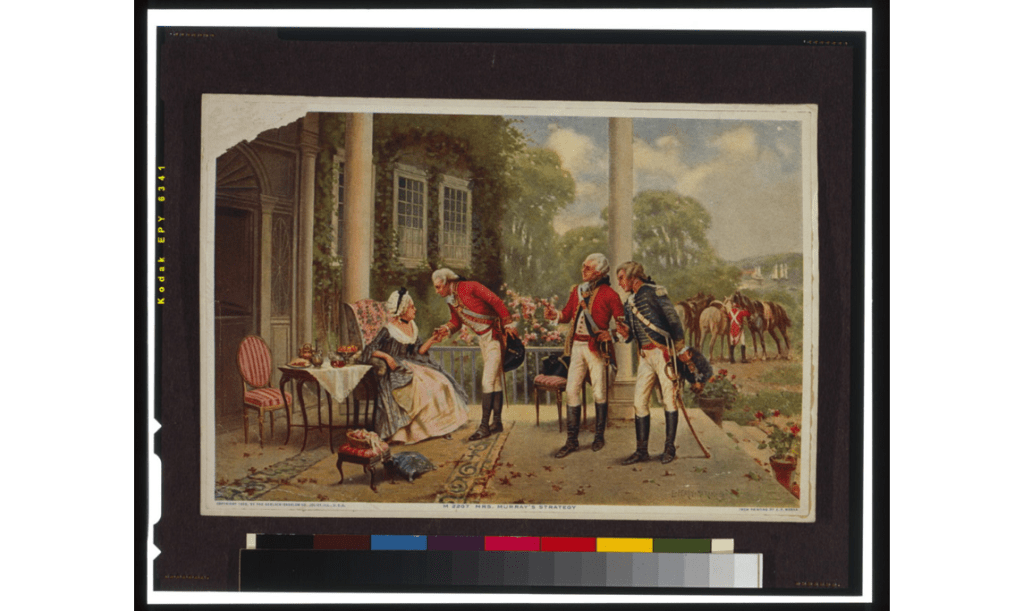
An Unconventional Hero
The War of the Revolution was the first true civil war in American history. Loyalist vs. Patriot equated to neighbor vs. neighbor, brother vs. brother and sometimes husband vs. wife. Such was the case in the family of the person I’m focusing on today, if you believe that in life and relationships, ideals, loyalties and sentiments can be reduced to simple black and white.
Robert MURRAY and Mary LINDLEY were born in the early 18th century. Their families’ paths crossed in Pennsylvania where Mary was born from Scots Irish emigrant parents who were members of the Society of Friends (Quakers). Robert and his Presbyterian family had emigrated from Scotland. Robert left the Presbyterians, joined Mary’s Society of Friends, they married about mid-century and started their family. Robert was established as a miller on the Swatara near Lancaster, Pennsylvania. Along with some Lindley relations the Murrays migrated further to North Carolina for a time.
The Murrays pulled up roots again and eventually settled in New York City where Robert became “one of the most respectable merchants in America,” owning ships, storehouses, and a wharf on the East River at the foot of present-day Wall Street. George Washington debarked at Murray’s Wharf when he arrived from Virginia to be sworn in as the first President of the United States in 1789. It has been written that prior to the Revolution Murray “owned more ships than anyone in America”2. He held similar interests in London and resided there for a time, as well, hoping to benefit physically from the climate but, seeing no improvement, returned to New York. Famously, he was “one of the five persons rich enough to keep a coach,” the governor and Lt. governor being two of the others. “He called his carriage a ‘leather conveniency,’ in order to avoid the scandal of pride and vain glory,”3 which were in opposition to his Quaker values. His circle included men whose names are familiar to us today, including an attorney who represented him in business affairs named Alexander Hamilton.
Today’s Murray Hill neighborhood on the east side of Manhattan is named for the Robert Murrays and was the location of a home and farm property, named Inclenberg. The farm was in “the country” in the mid-18th century, some distance from their home and Robert’s commercial properties in “the City” which was concentrated in lower Manhattan.
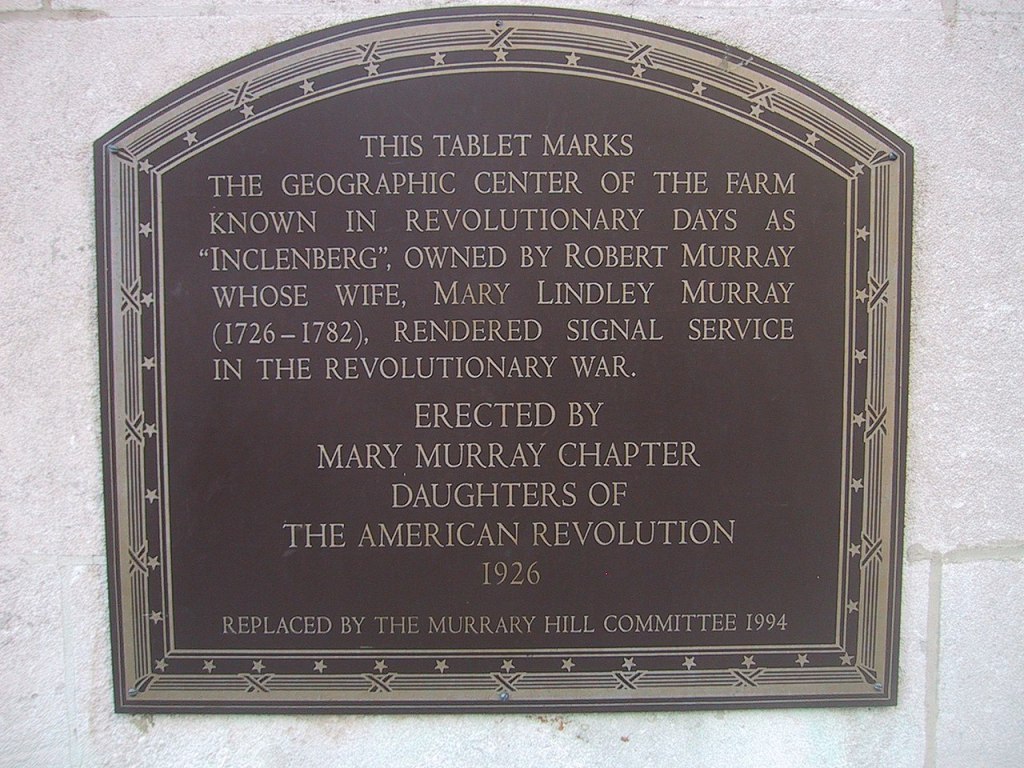
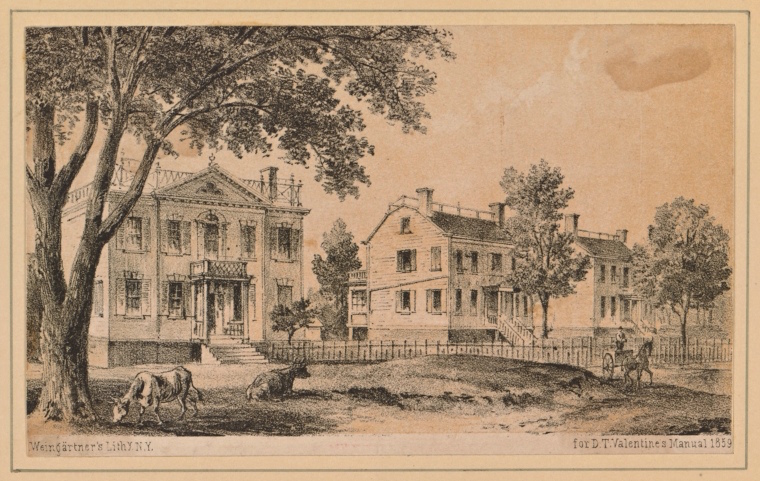
Robert MURRAY, 1721-1786, left his mark as a distinguished citizen of New York City, commercially, civically and through philanthropy. But he isn’t the hero of this story.
In the summer of 1776, General George Washington and 10,000 patriots met with defeat at the hands of British General William Howe and his 20,000 troops at the Battle of Brooklyn, Long Island, said to be the biggest battle of the Revolution.4 Rather than surrender, General Washington, under a cover of fog, led an overnight retreat across the East River to Manhattan. He and the main body of his army removed to Harlem Heights and stopped at the Murray’s Inclenberg home along the way. Needing to know the movements of General Howe, Washington and a council of war made a plan to infiltrate the enemy ranks. A young officer volunteered for the dangerous mission. It was from Inclenberg that General Washington dispatched Nathan Hale to spy on General Howe. Mary L. Booth wrote in her 1859 book, History of the City of New York:
He [Hale] passed over to Long Island, penetrated the enemy’s lines, made drawings of his works, and gained full intelligence of the projected movements of the army. On his return he was recognized as belonging to the American army, and at once arrested…he was tried, convicted as a spy, and sentenced to be hung the next morning at day-break.” When ordered by the cruel ‘Bloody Bill’ Cunningham to make a “dying speech and confession,” Hale said the famous words “‘I only regret that I have but one life to lose for my country,’ was the calm reply of the doomed patriot. These were his last words; the next moment he was suspended on an apple-tree in the orchard, whence his bones were thrust into a nameless grave.5
American General Israel Putnam remained in the city with about four thousand men who began their advance northward. Simultaneously, British General Howe’s men were landing on the island between Putnam and his destination. An aid of Putnam’s, Colonel Aaron Burr, directed him to choose a new parallel road “through the hills on the line of Broadway,”6 west of their current route. A lack of encounter with the Patriots led the Britons to believe the Patriots were well ahead of them in their retreat.
In 1827 Dr. James Thacher, a surgeon in General Washington’s army published A Military Journal During the American Revolutionary War, from 1775 to 1783. He described these events in his journal:
“Most fortunately, the British generals, seeing no prospect of engaging our troops, halted their own, and repaired to the house of Mr. Robert MURRAY, a quaker and friend of our case; Mrs. Murray treated them with cake and wine, and they were induced to tarry two hours or more, Governor Tryon frequently joking her about her American friends. By this happy incident, General Putnam, by continuing his march, escaped a rencounter(sic) with a greatly superior force, which must have proved fatal to his whole party. Ten minutes, it is said, would have been sufficient for the enemy to have secured the road at the turn, and entirely cut off General Putnam’s retreat. It has since become almost a common saying among our officers, that Mrs. Murray saved this part of the American Army.“
Mary L. Booth wrote in her book, History of the City of New York that the “Quaker hostess…had received a hint from Washington to intercept and detain them as long as possible,” … ‘them,’ according to Booth, being “[General] Howe, [General Henry] Clinton, [Governor William] Tryon and a few others.” Within the span of what may have been measured by hours, generals from both sides of the Revolution had graced Mary LINDLEY MURRAY’s country home and entertained by her and her daughters. It has been written that her husband, Robert MURRAY, was away at the time of this encounter, perhaps on one of his voyages to the West Indies. These events certainly bring into question the loyalties of the MURRAY family. Their alignment with The Society of Friends, the Quakers, would cause one to assume that the MURRAYS were passive in the war. Perhaps they were passive, but not necessarily neutral. Mary MURRAY’s actions spoke for her loyalty. But as a businessman with interests in both the colonies and in England, her husband’s actions appear to have been, understandably, more diplomatic.
Americans found victory at Battle of Harlem heights, fought on the grounds of the present location of Columbia University. Even so, American forces would eventually abandon New York City, leaving it under British control which was held until the end of the war.
Although some describe Mary LINDLEY MURRAY’s contribution to history as hyperbole, she was listed as a Patriot by the Daughters of the American Revolution (patriot number A083415). Mary and the event have been memorialized in many and diverse ways.


Mary Lindley Murray wife of Robert Murray for services rendered her country during the American Revolution, entertaining at her home, on this site, Gen. Howe and his officers, until the
American troops under Gen. Putnam escaped. September 15, 1776. November 25, 1903, Erected By Knickerbocker Chapter, New York City Daughters of the American Revolution” PHOTO: http://www.ephemeralnewyork.wordpress.com
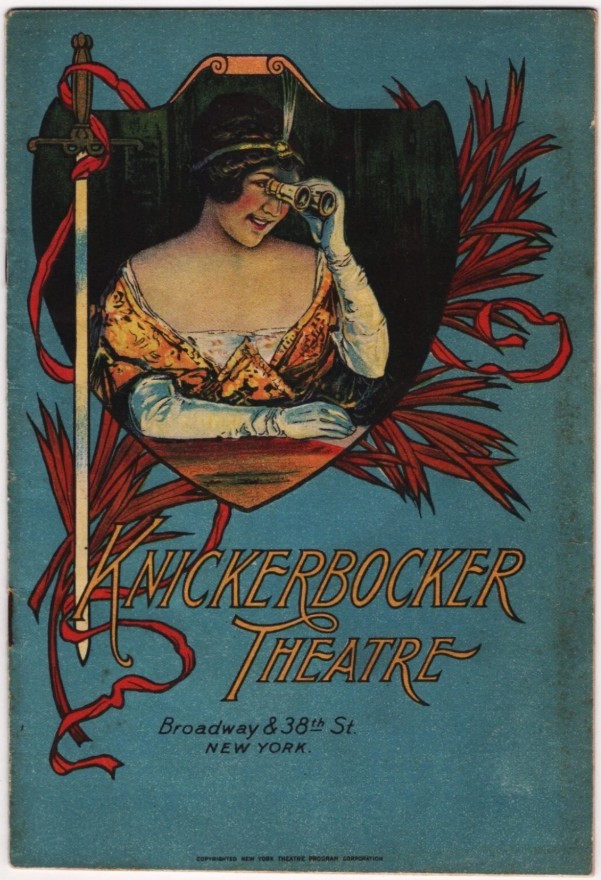
On September 18, 1925, Dearest Enemy a Broadway musical by Rodgers and Hart (Rodgers of Rodgers and Hammerstein fame) based on Mary’s encounter with British officers, opened at the Knickerbocker Theatre. It closed after 286 performances, an impressive run for the time.7
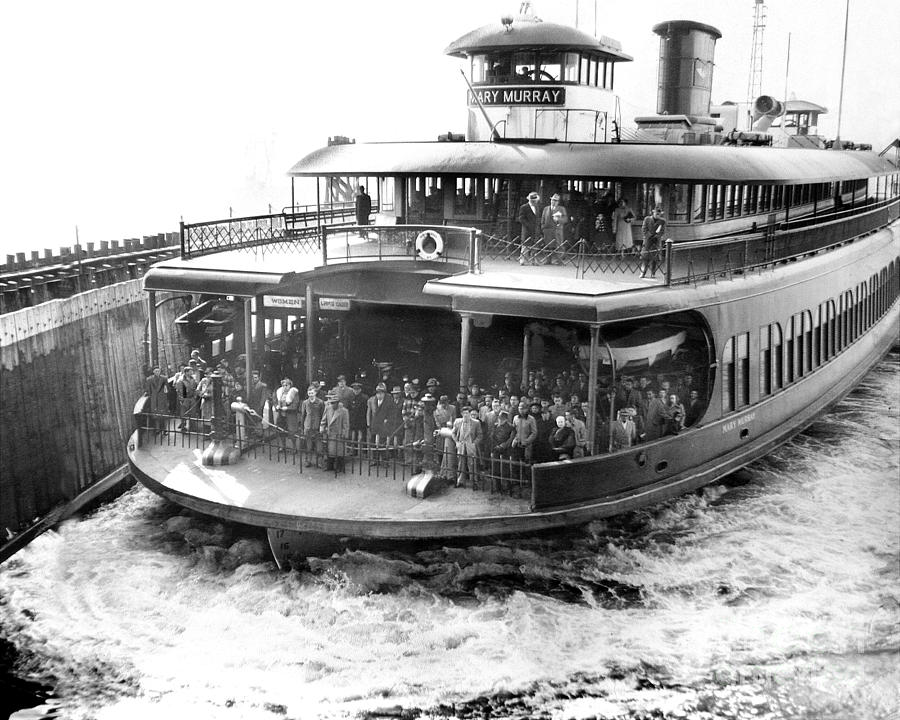
June 3, 1937 the Mary Murray ferry boat was christened by her descendant, for the Staten Island Ferry. The boat was decommissioned in 1975.8


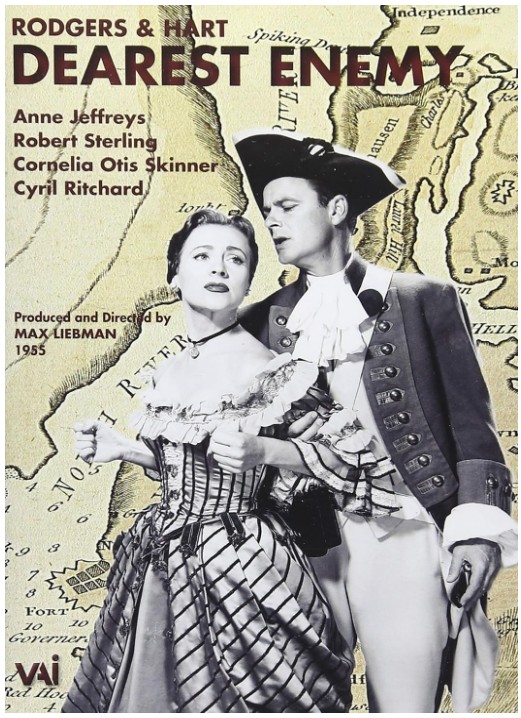
In November of 1955, with the advent of television came a live telecast adaptation of the 1925 musical Dearest enemy. The same telecast was released on DVD in 2012 and may be found on YouTube.
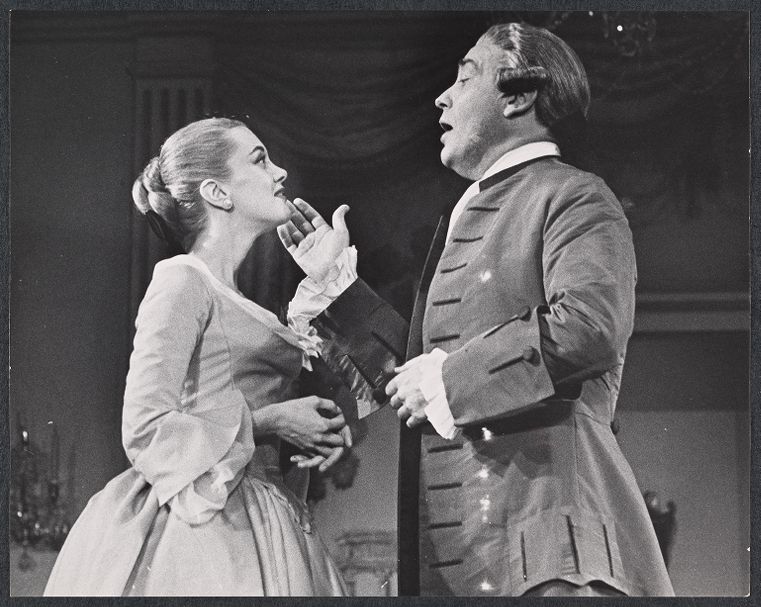
In January of 1957 a second original Broadway play Small War on Murray Hill by Robert E. Sherwood opened at the Ethel Barrymore Theatre but had a very “small” run. It closed after only 12 performances.
In 1976, the Franklin Mint released a commemorative medal honoring Mary Lindley Murray’s “clever diversion.”

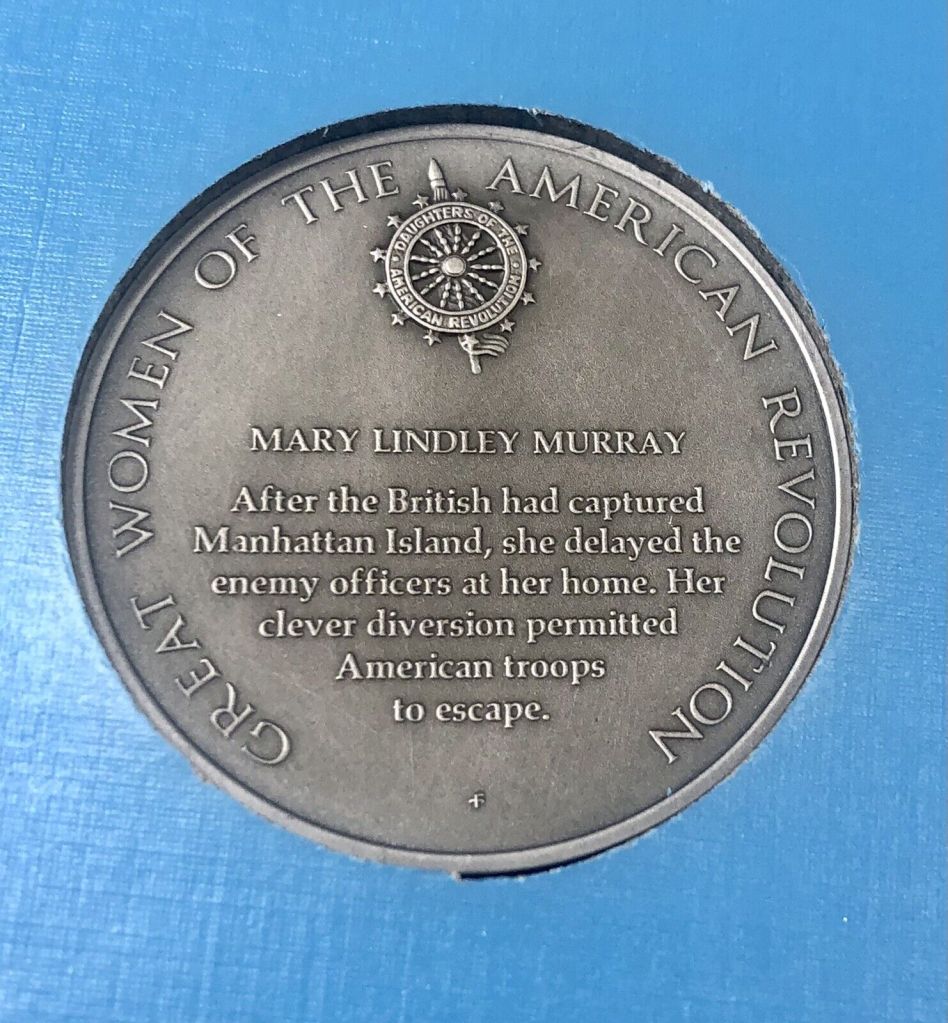
While these are flattering or at least interesting memorials to Mary LINDLEY MURRAY, her greatest legacy was her children, among them, Lindley MURRAY, the eldest of Mary’s 12 children, was a lawyer and a writer of many books including his English Reader which Abraham Lincoln considered “the best schoolbook ever put into the hands of an American youth.” Second son, John “Quaker John” MURRAY, married Catherine BOWNE, sister to the mayor of New York City, was co-founder of the New York Manumission Society alongside Alexander HAMILTON and was a New York Hospital Trustee, known as a great philanthropist.
In regards to the personal family connection to this heroine of the Revolution–Mary LINDLEY MURRAY is my husband’s first cousin eight times removed.

Happy Independence Day to all the strong women who are descendants of the LINDLEY and MURRAY families!
- Treaty of Paris (1783), National Archives ↩︎
- Barrett, Walter, clerk, The Old Merchants of New York City, Carleton, Publisher, 1864, Page 289 ↩︎
- Barrett, Walter, clerk, The Old Merchants of New York City, Carleton, Publisher, 1864, Page 289 ↩︎
- http://www.battlefields.org ↩︎
- Booth, Mary L., History of the City of New York, W.R.C. Clark & Meeker, 1859, Page 501 ↩︎
- Booth, Mary L., History of the City of New York, W.R.C. Clark & Meeker, 1859, Page 504 ↩︎
- Playbill ↩︎
- Times Union, newspaper, Brooklyn, New York, 4 Jun 1937, Page 8 ↩︎








Share your thoughts?